
Buyer Information
Founded in the 1920s as an upscale garden suburb designed by architect Richard Kauffmann. Over the decades it has been home to Jerusalem's intellectual and political…
Character & History
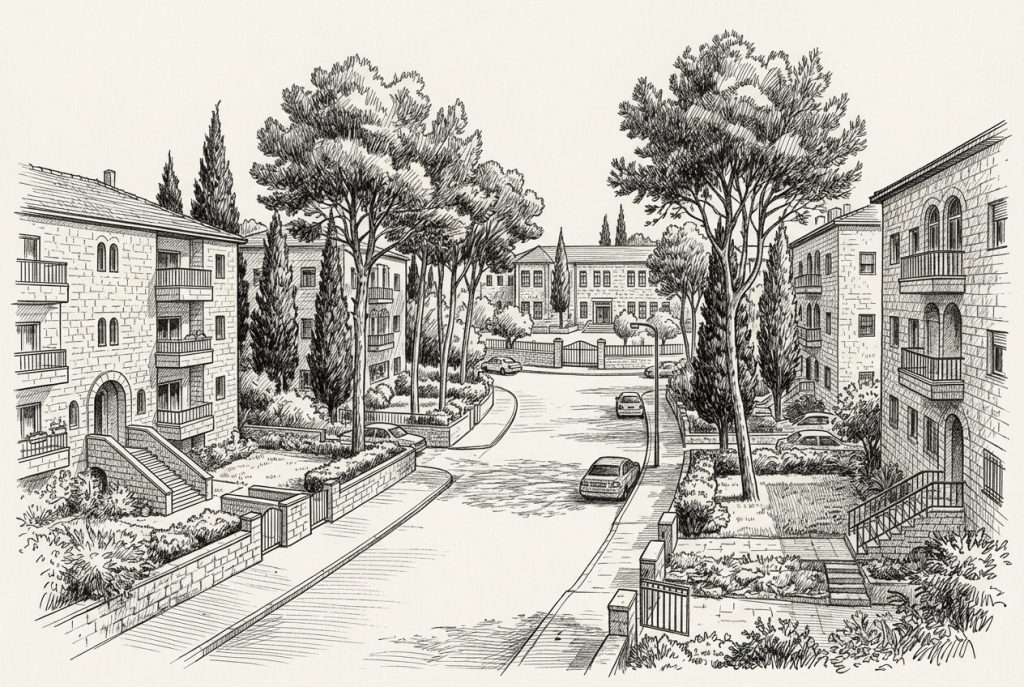
Founded in the 1920s as an upscale garden suburb designed by architect Richard Kauffmann. Over the decades it has been home to Jerusalem's intellectual and political elite, including the Prime Minister's residence.
Features & Architecture
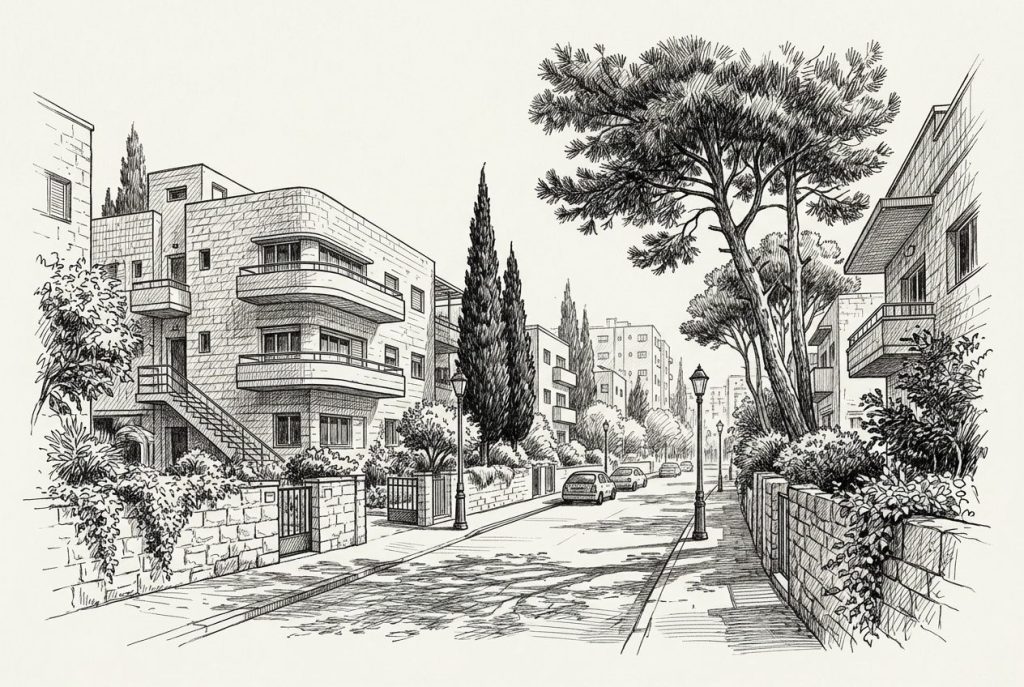
Green, shaded streets named after Sephardi sages, restrained Bauhaus-style architecture and Jerusalem stone, alongside buildings that have been renewed through urban renewal and TAMA 38 upgrades.
Population
A large Anglo-Saxon and French community, academics, established families, and a modern religious-Zionist and traditional population. Home to a variety of leading synagogues, such as Yeshurun.
Location & Access
Extremely central. A short walk to the city center, Mahane Yehuda Market, the Great Synagogue, and the Western Wall (about 25-30 minutes on foot).
One of the capital's most prestigious and sought-after neighborhoods. Built in the 1920s by affluent Arab Christian families, it has kept its aristocratic character to this…
Character & History
One of the capital's most prestigious and sought-after neighborhoods. Built in the 1920s by affluent Arab Christian families, it has kept its aristocratic character to this day.
Features & Architecture
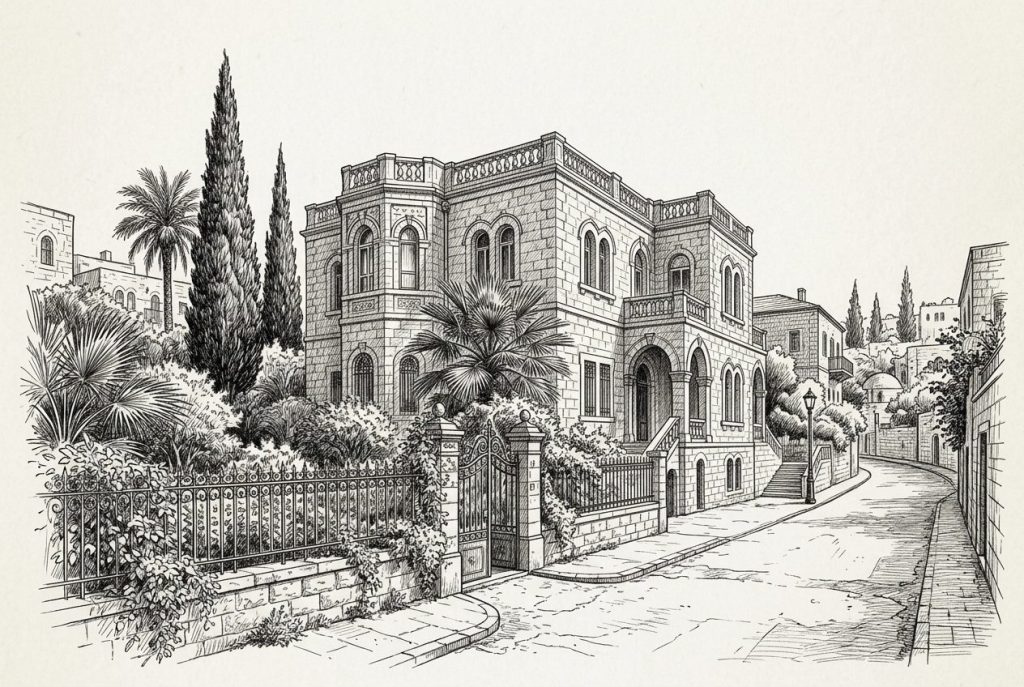
Grand historic villas, period mansions, and quiet, wide streets. The neighborhood is home to national and cultural institutions such as the President's Residence, the Jerusalem Theatre, and the Van Leer Institute. With some properties, it is worth checking the status of Church-owned land (many cases have already been resolved).
Population
Diplomats, long-time expats from France, the U.S., and the U.K., government officials, and very well-established families.
Location & Access
Borders Rehavia, the German Colony, and Katamon. About a 20-minute walk from the Mamilla complex and Jaffa Gate.
Founded in the second half of the 19th century by German Templers. Blending farming and craftsmanship, it became one of the city's best-known architectural landmarks.
Character & History
Founded in the second half of the 19th century by German Templers. Blending farming and craftsmanship, it became one of the city's best-known architectural landmarks.
Features & Architecture
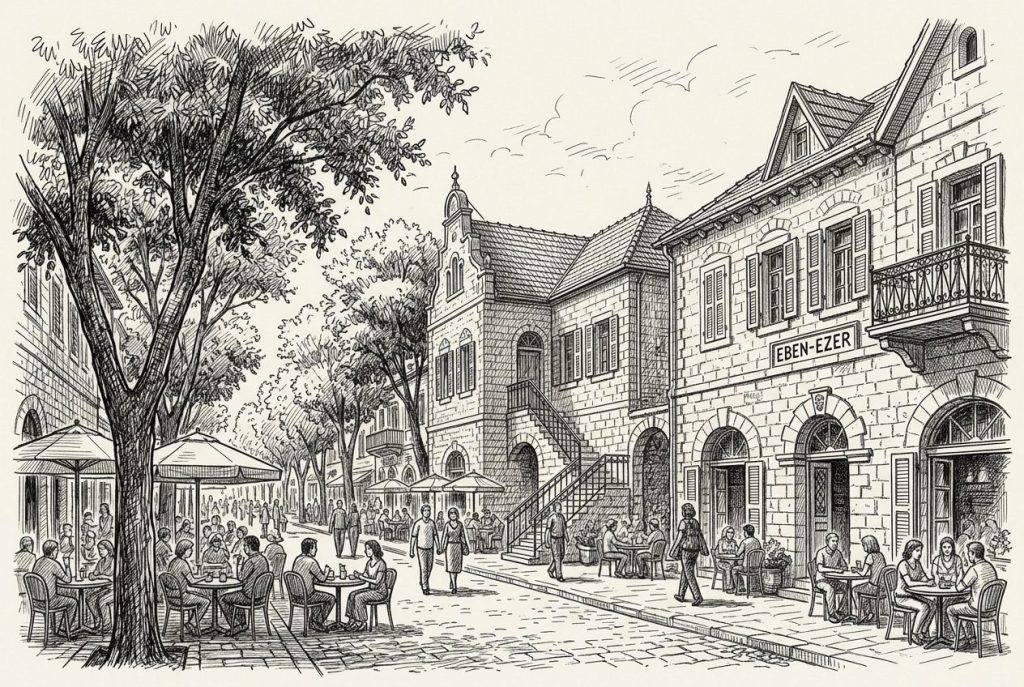
Classic Templer houses with tiled roofs, wooden shutters, and stone arches. The main artery is lively Emek Refaim Street, lined with cafes, boutiques, restaurants, and bookstores.
Population
A clear magnet for English- and French-speaking immigrants and expats. A liberal religious-Zionist community alongside a pluralistic secular population.
Location & Access
Next to the First Station complex, the Train Track Park, and Talbiyeh. Quick, easy access to the city center and the Old City.
Established in the early 20th century around Joshua Ben Nun Street for the city's Greek Orthodox community.
Character & History
Established in the early 20th century around Joshua Ben Nun Street for the city's Greek Orthodox community.
Features & Architecture
An intimate, peaceful, pastoral neighborhood laid out as a network of narrow streets with low stone houses, spacious inner courtyards, and fruit trees.
Population
A mix of an affluent immigrant community (Anglo-Saxons, French) and long-time Israelis looking for a village atmosphere in the city, close to all the entertainment hubs.
Location & Access
Adjacent to the German Colony and Baka, a short stroll from Emek Refaim and the Train Track Park.
An established southern neighborhood founded in the late 19th century. In recent decades it has become one of the most sought-after choices for well-established immigrant families.
Character & History
An established southern neighborhood founded in the late 19th century. In recent decades it has become one of the most sought-after choices for well-established immigrant families.
Features & Architecture
Green streets (such as Derech Beit Lechem and Yissachar Street) with an abundance of original Arab-style mansions alongside modern boutique projects. Derech Beit Lechem is a lively neighborhood center with patisseries, cafes, and local shops.
Population
A very dominant Anglo-Saxon and French community, young and older families, and an active modern-Orthodox community with well-known synagogues (such as Shira Hadasha and Nitzanim).
Location & Access
Borders the Train Track Park, the German Colony, and Talpiot. Convenient walking access to the First Station complex and entertainment areas.
Founded in 1931 as a garden neighborhood on a high ridge in the southeast of the city. It has drawn considerable international interest in recent years…
Character & History
Founded in 1931 as a garden neighborhood on a high ridge in the southeast of the city. It has drawn considerable international interest in recent years since the U.S. Embassy moved to the area.
Features & Architecture
A blend of "Old Arnona" (houses on their own land, well-kept gardens, and complete quiet) and new luxury projects and modern towers with open views of the Judean Desert.
Population
A growing Anglo-Saxon and international community, young families, diplomats, and a high-quality religious-Zionist community.
Location & Access
A quiet neighborhood, slightly removed from the noisy center, with excellent access to Talpiot (shopping and services), Hebron Road, and the future light rail lines.
Founded in the early 20th century and greatly expanded during the British Mandate. A neighborhood rich in heritage, including the Battle of San Simon in 1948.
Character & History
Founded in the early 20th century and greatly expanded during the British Mandate. A neighborhood rich in heritage, including the Battle of San Simon in 1948.
Features & Architecture
Rich stone architecture, well-kept gardens, elegant residences, and a mix of high-end urban renewal. San Simon Park is the neighborhood's "green lung".
Population
A central hub for English-speaking immigrants, a very diverse modern religious-Zionist community, alongside students and young families.
Location & Access
Borders Rehavia, Talbiyeh, and the German Colony. An excellent location for families looking for a quiet residential neighborhood that is still well connected.
Founded in the 1920s and named after Rabbi Shmuel Salant. A small, quiet and intimate neighborhood that is sometimes overlooked among its larger neighbors.
Character & History
Founded in the 1920s and named after Rabbi Shmuel Salant. A small, quiet and intimate neighborhood that is sometimes overlooked among its larger neighbors.
Features & Architecture
Low stone buildings, dead-end side streets that guarantee exceptional quiet, and proximity to cultural institutions.
Population
Academics, long-time Anglo-Saxon immigrants, and a religious-Zionist and traditional population in a quiet, bourgeois atmosphere.
Location & Access
Strategically located in the triangle between Rehavia, Talbiyeh, and Katamon. A short walk from the Jerusalem Theatre and the main synagogues.
Founded in the 1920s as a tiny, isolated farming colony in the south of the city, and stood on the front line during the 1948 War…
Character & History
Founded in the 1920s as a tiny, isolated farming colony in the south of the city, and stood on the front line during the 1948 War of Independence.
Features & Architecture
Going through a huge wave of development. Alongside the remains of historic houses on their own land, new modern residential complexes are being built along the Train Track Park.
Population
A young community, Israeli families alongside new immigrants and expats who have recognized the area's location and appreciation potential.
Location & Access
Adjacent to the Train Track Park (direct access on foot or by bike to Emek Refaim and the First Station complex), near the Hadar Mall and the Talpiot shopping area.
Founded in the 1960s on the initiative of immigrants from the United States and other English-speaking countries who wanted to build a modern community neighborhood in…
Character & History
Founded in the 1960s on the initiative of immigrants from the United States and other English-speaking countries who wanted to build a modern community neighborhood in Jerusalem.
Features & Architecture
Terraced houses with tiled roofs, internal pedestrian paths without car traffic, and a green environment next to the Valley of the Cross.
Population
An established academic population, immigrants from the United States, and families who value quiet and urban nature.
Location & Access
Close to the Hebrew University's Givat Ram campus, the Israel Museum, and Neve Sha'anan, with quick access to the city exit and the Begin Expressway.
Built in the 1950s by the Rassco company for the city's middle class, academics and medical professionals.
Character & History
Built in the 1950s by the Rassco company for the city's middle class, academics and medical professionals.
Features & Architecture
Characterized by low-rise construction, older buildings being upgraded, new urban renewal projects, and green, quiet public spaces.
Population
A diverse population: long-time Israelis, university faculty, young families, and new immigrants looking for a quiet alternative that is slightly less expensive than Rehavia and Katamon.
Location & Access
A central location between Katamon, Nayot, and Beit HaKerem, close to Herzog Street and the Begin Expressway.
A neighborhood founded in the 1950s to absorb large waves of immigration, built mostly as public housing.
Character & History
A neighborhood founded in the 1950s to absorb large waves of immigration, built mostly as public housing.
Features & Architecture
The largest and most significant urban renewal hub in Jerusalem. The neighborhood is changing its face with modern residential towers, new public institutions, and developed infrastructure. A prominent investment opportunity for buyers.
Population
A fascinating social mix of long-time residents, young couples, investors, and expats looking for new, high-standard apartments at more accessible prices.
Location & Access
Borders Malcha Park and the Train Track Park, close to Teddy Stadium, with a direct connection to the light rail lines (Green and Blue lines).
A historic seam-line neighborhood between the Old City and west Jerusalem. After 1967 it was largely demolished and rebuilt as one of Israel's best-known luxury developments.
Character & History
A historic seam-line neighborhood between the Old City and west Jerusalem. After 1967 it was largely demolished and rebuilt as one of Israel's best-known luxury developments.
Features & Architecture
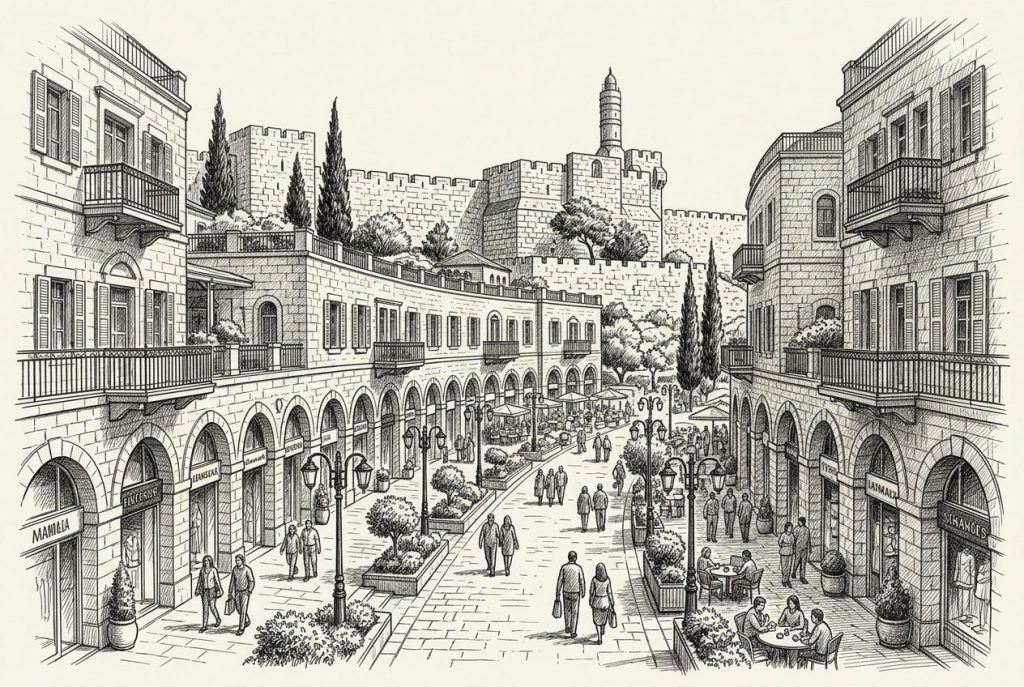
Modern luxury apartments built with historic motifs and hewn Jerusalem stone, directly above the prestigious open-air shopping avenue "Alrov Mamilla".
Population
A very high share of expats, business people, and international investors who use the properties as holiday and vacation homes.
Location & Access
The most prestigious location in the city, right opposite the Old City walls and Jaffa Gate, a short stroll from the city center and the leading hotels (King David, Waldorf Astoria).
Founded in the late 19th century on the initiative of Moses Montefiore, as a continuation of Mishkenot Sha'ananim, the first neighborhood outside the city walls. Restored…
Character & History
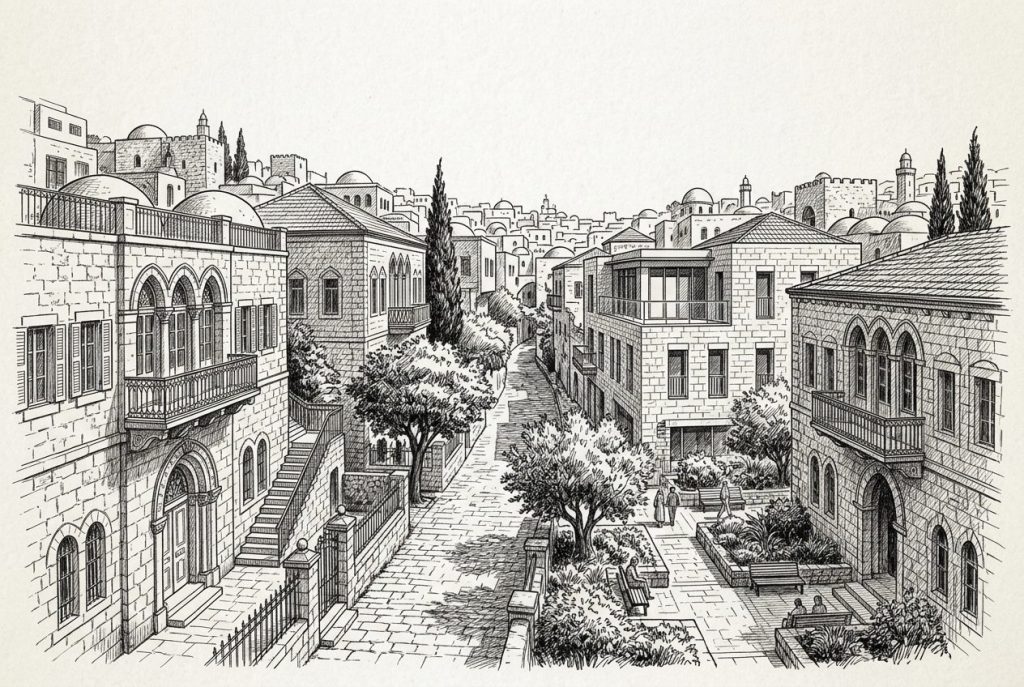
Founded in the late 19th century on the initiative of Moses Montefiore, as a continuation of Mishkenot Sha'ananim, the first neighborhood outside the city walls. Restored after the Six-Day War, it is now an artists' and luxury quarter.
Features & Architecture
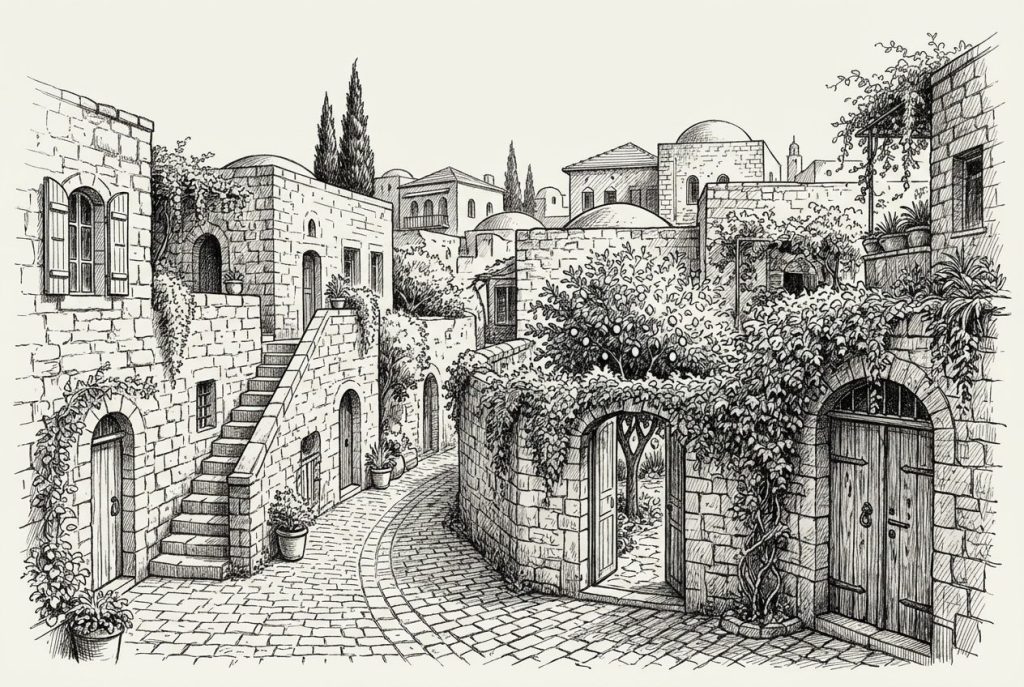
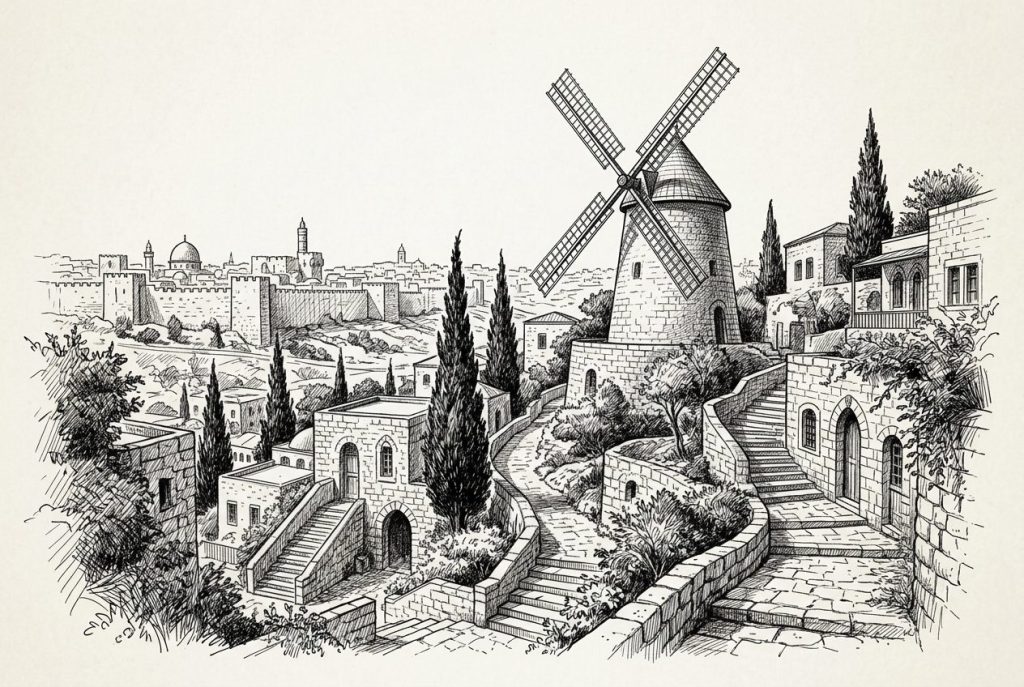
Stone-paved, pedestrian-only streets, picturesque alleys, stone steps, arches, Ottoman stone houses, and the famous windmill.
Population
A relatively exclusive and closed community of affluent expats, diplomats, artists, and intellectuals.
Location & Access
Looks directly onto the Old City walls and the Tower of David. A short walk from the First Station complex, Talbiyeh, and the city center.
A cluster of dozens of tiny courtyard neighborhoods built from the late 19th century outside the walls by different communities: Yemenite, Sephardi, Ashkenazi, Urfali and others.
Character & History
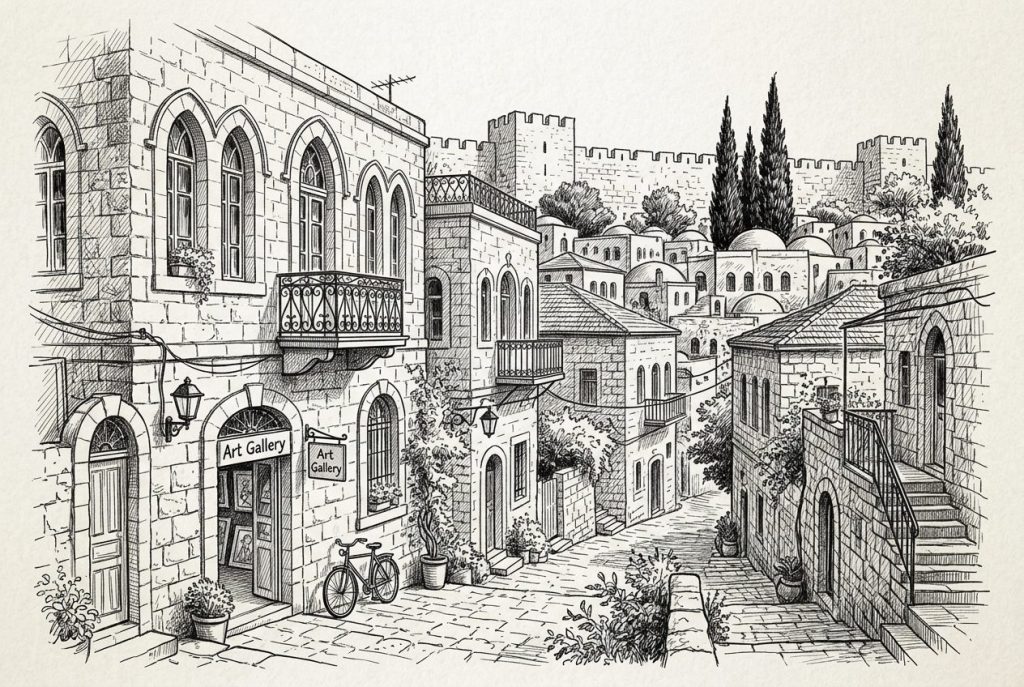
A cluster of dozens of tiny courtyard neighborhoods built from the late 19th century outside the walls by different communities: Yemenite, Sephardi, Ashkenazi, Urfali and others.
Features & Architecture
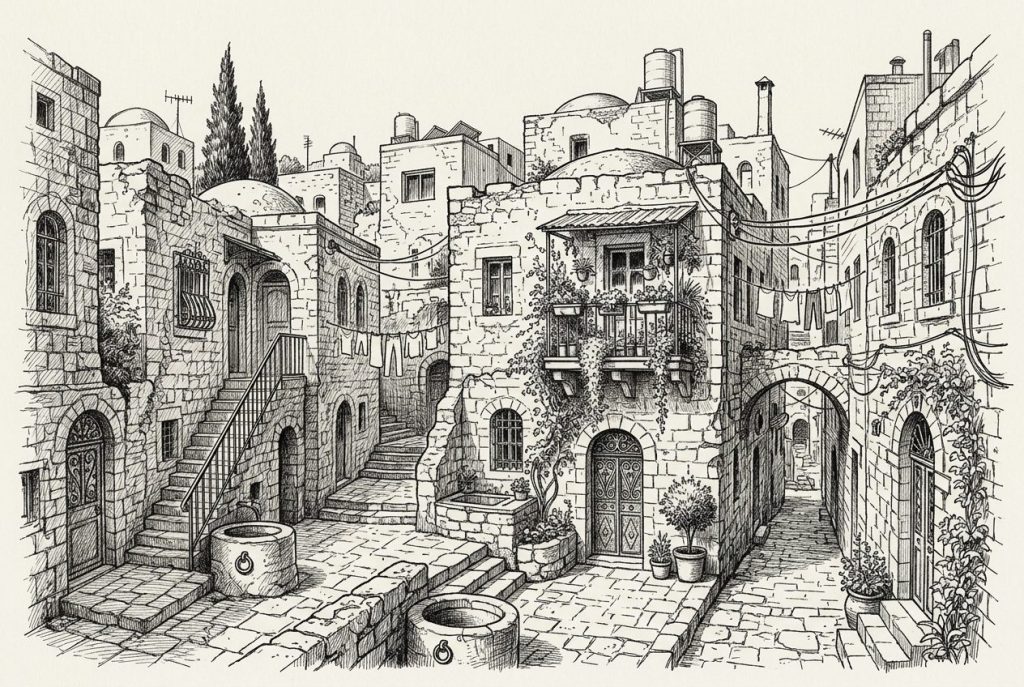
A maze of picturesque alleys, historic cisterns, ornate iron doors, and communal courtyards. A bohemian, authentic atmosphere full of life.
Population
A unique mix of young people, students, artists, and English-speaking immigrants (including the returnees-to-tradition community), alongside long-time residents and Haredi families.
Location & Access
Right next to Mahane Yehuda Market, Sacher Park, and Jaffa Street. Perfect access to the light rail and the city center.
Founded in the 1920s by immigrants from Yemen. An integral part of the Nachlaot fabric, with a slightly calmer character.
Character & History
Founded in the 1920s by immigrants from Yemen. An integral part of the Nachlaot fabric, with a slightly calmer character.
Features & Architecture
Narrow streets with low stone houses, alongside the constant upgrading of buildings into luxurious, designer boutique apartments.
Population
Young families, English-speaking immigrants, artists, and a traditional-religious community connected to its roots.
Location & Access
Borders Rehavia and Sha'arei Chesed on one side, and Nachlaot and the city center on the other. Enjoys proximity to Sacher Park.
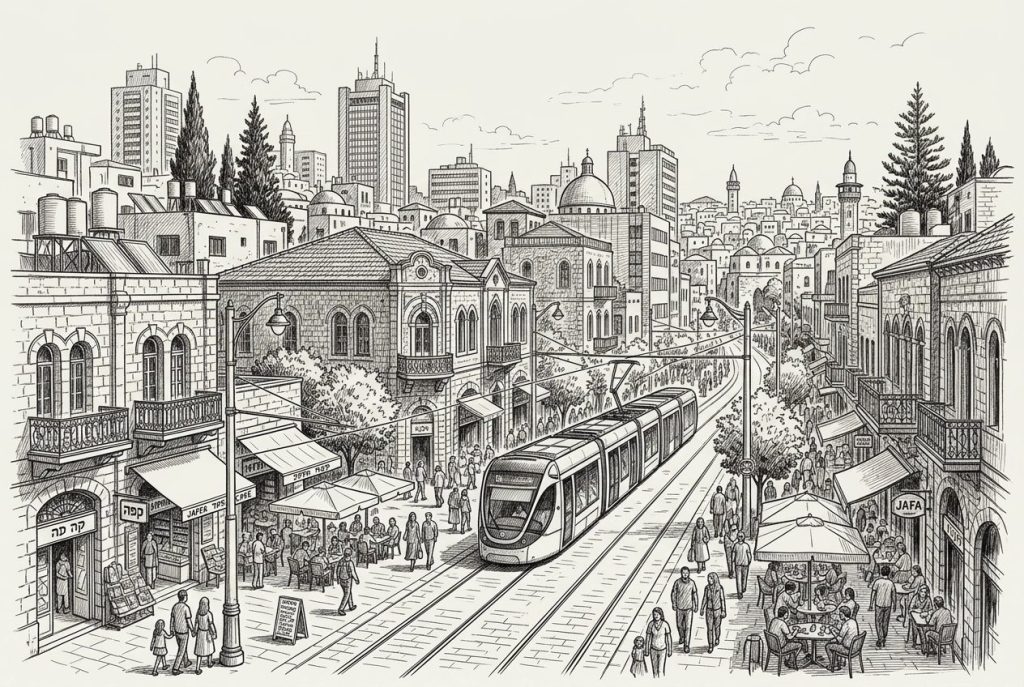
The beating heart of west Jerusalem, built and developed from the late 19th century along Jaffa Road and the triangle of Ben Yehuda, King George and…
Character & History
The beating heart of west Jerusalem, built and developed from the late 19th century along Jaffa Road and the triangle of Ben Yehuda, King George and Jaffa streets.
Features & Architecture
Lively urban construction, modern residential towers alongside preserved buildings, and an abundance of restaurants, cafes, shops, and pedestrian streets that are busy at all hours.
Population
Young people, business people, buyers of investment apartments, and expats who want an apartment "in the heart of things", right next to the light rail.
Location & Access
The best-connected location in the city: frequent light rail service (the Red Line) and a short walk to Mahane Yehuda Market, Mamilla, and Jaffa Gate.
Founded in 1909 as a traditional Haredi neighborhood, and for many years a major spiritual and Torah center.
Character & History
Founded in 1909 as a traditional Haredi neighborhood, and for many years a major spiritual and Torah center.
Features & Architecture
It has become one of the most expensive and sought-after neighborhoods in Jerusalem. Historic alleys that turned into grand stone estates, modern boutique buildings built to uncompromising standards, and careful preservation of its religious character.
Population
A very affluent Haredi community, with an especially high concentration of wealthy families from the U.S., the U.K., France, and Switzerland, alongside Torah scholars and yeshiva heads.
Location & Access
Adjacent to Rehavia and Sacher Park, a short walk from the city center and the main synagogues.
Founded in the 1920s as one of Jerusalem's six garden neighborhoods. Traditionally home to educators, teachers and professors.
Character & History
Founded in the 1920s as one of Jerusalem's six garden neighborhoods. Traditionally home to educators, teachers and professors.
Features & Architecture
Wide, quiet streets, many pine trees, and a green, suburban character in the heart of the city. The neighborhood includes the old "Beit HaKerem", the newer "Ramat Beit HaKerem", and urban renewal projects.
Population
A secular and traditional-liberal Israeli population, academics and medical professionals, alongside established immigrant families looking for a peaceful community with one of the city's best education systems.
Location & Access
West Jerusalem. Excellent access to the light rail on Herzl Street, close to the Givat Ram campus, the Shaare Zedek Medical Center, and the exit from the city toward Tel Aviv.
Founded in the late 19th century by affluent Arab Christians. After 1948 it sat on the city's dividing line and became a stronghold of the Black…
Character & History
Founded in the late 19th century by affluent Arab Christians. After 1948 it sat on the city's dividing line and became a stronghold of the Black Panthers movement. Today it is a center of art and luxury.
Features & Architecture
Striking Arab architecture with arched windows, high ceilings, and iron ornamentation, alongside active art institutions (the Musrara School of Photography, galleries).
Population
Artists, intellectuals, immigrants, and expats from France and the U.S. who appreciate authentic preserved architecture and a central location.
Location & Access
A few minutes from the Safra Square area (City Hall), the Russian Compound, Damascus Gate, Jaffa Gate, and the light rail on Jaffa Street.
An independent local council on the Judean Hills ridge, west of the capital. It began in the 1950s as an immigrant transit camp and grew into…
Character & History
An independent local council on the Judean Hills ridge, west of the capital. It began in the 1950s as an immigrant transit camp and grew into a sought-after upscale suburb.
Features & Architecture
A distinctly suburban character: spacious villas, cottages with large gardens, new neighborhoods (such as Reches Halilim and Nof Harim), and open mountain views with clear air.
Population
Families from a high socio-economic background, professionals, and many immigrants from Western countries looking for suburban quality of life and a home with a garden within easy reach of Jerusalem.
Location & Access
Sits on Route 1. About 10 minutes' drive from the entrance to Jerusalem and about 35-40 minutes from Tel Aviv and Ben Gurion Airport. Leading shopping centers nearby (Harel Mall, Mevaseret Mall).
BUYER INFORMATION

